
Robo-Advisor Cost Comparison Tool
Calculate Your Best Fit
Enter your investment details to see which robo-advisor saves you more money based on your specific situation.
When you're starting to invest, the last thing you want is to spend hours picking stocks or worrying about when to rebalance your portfolio. That’s where robo-advisors come in. They do the heavy lifting for you-automatically building, managing, and optimizing your investments. Two of the biggest names in this space are Betterment and Wealthfront. But which one actually works better for your life? It’s not just about fees. It’s about how much control you want, how much you’re investing, and whether you care more about saving on taxes or having a real person to talk to when things get confusing.
What You Get for Your Money
Both Betterment and Wealthfront charge an annual advisory fee of 0.25% on their basic plans. That’s way lower than the 1% you’d pay a traditional financial advisor. But here’s where things get interesting. Betterment gives you two tiers: the Digital Plan at 0.25% and the Premium Plan at 0.65%, which kicks in once you hit $100,000 in assets. Wealthfront? Just one flat rate: 0.25%, no matter how much you have-even if you’re sitting on $2 million. That might sound better, until you realize Betterment’s Premium Plan includes unlimited access to certified financial planners (CFPs). You can call them, schedule video chats, get personalized advice on retirement, college savings, or even buying a house. Wealthfront doesn’t offer human advisors at all. Instead, it gives you a tool called Path, which walks you through financial goals using algorithms. It’s smart. But it’s not the same as talking to someone who’s seen your situation before.Minimums and Getting Started
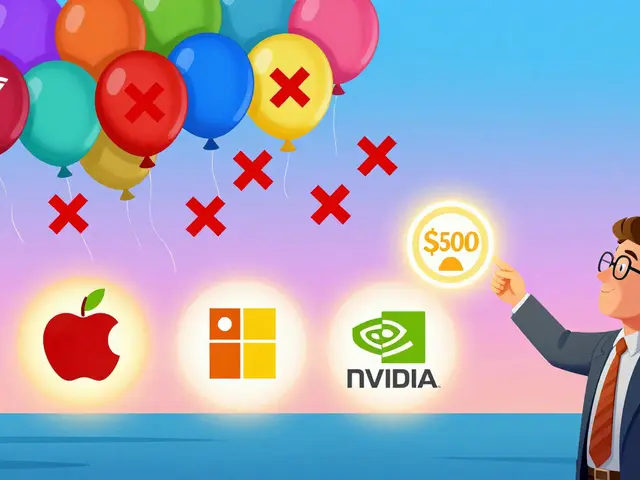
If you’re just starting out, Betterment wins on accessibility. There’s no minimum to open an account. You can start with $1, $10, or $100-it doesn’t matter. Wealthfront requires $500 to activate its full automated investing service. That might not sound like much, but if you’re saving up for your first investment, that $500 barrier can delay progress. Both platforms offer cash management accounts with no minimums, but only Betterment lets you deposit any amount into your investment account right away. For beginners, that flexibility matters. You don’t need to wait until you hit a magic number to begin building wealth.Tax Optimization: The Real Game-Changer
This is where Wealthfront pulls ahead-for the right person. Both platforms do tax-loss harvesting, which means they sell losing investments to offset gains and reduce your tax bill. But Wealthfront goes further. For accounts over $100,000, it offers direct indexing. Instead of holding ETFs, it buys individual stocks that mirror the market. That gives it more control. It can pick exactly which shares to sell for maximum tax savings. Betterment uses ETF-level harvesting-less precise, but still effective. According to independent analysis from IWTBTR.com, a $200,000 taxable portfolio could save you around $1,300 a year in taxes with Wealthfront’s direct indexing, while Betterment’s approach might save closer to $800. For high-income earners in states like California or New York, that difference adds up fast. If you’re in the 32% tax bracket or higher and you’ve got taxable accounts, Wealthfront’s edge is real. If you’re investing mostly in IRAs or you’re not worried about taxes, Betterment’s simpler approach is perfectly fine.
Cash Management: More Than Just Investing
Your money doesn’t just sit in stocks. Most people keep some cash handy. Here, Wealthfront has a clear lead. It offers early direct deposit-meaning you can get paid up to two days before your employer’s scheduled payday. That’s huge if you’re living paycheck to paycheck. It also lets you borrow up to 30% of your investment portfolio value through a portfolio line of credit. Need to cover an emergency or make a down payment? You can tap into your investments without selling anything. Betterment reimburses ATM fees worldwide, which is great for travelers, but it doesn’t offer early pay or borrowing. Both give you debit cards, bill pay, and mobile check deposit. But Wealthfront’s cash features are built like a full banking alternative. Betterment’s is more of a side perk.Investment Options and Personalization
Betterment gives you more choices if you care about ethics. It offers multiple ESG (environmental, social, governance) portfolios-you can pick one focused on clean energy, gender equality, or fossil fuel exclusion. Wealthfront has one basic socially responsible option. If you want your money to reflect your values, Betterment gives you more ways to do it. Wealthfront, on the other hand, offers Smart Beta strategies and risk parity models for accounts over $500,000. These are advanced portfolio designs meant to outperform traditional market indexes. They’re not for everyone. But if you’re a sophisticated investor who understands volatility and asset allocation, Wealthfront gives you tools most robo-advisors don’t even touch.Human Support and User Experience
Betterment’s Premium Plan includes phone support with an average wait time under 10 minutes. You can call a CFP anytime. Wealthfront? Email only. Users report response times of 24 hours or more. On Trustpilot, Betterment has over 2,800 reviews with a 4.1/5 rating. People love the human touch. Wealthfront has a higher 4.3/5 rating from 1,250 reviews, but complaints about lack of support are common. One user wrote: “Felt abandoned when I had questions about my portfolio.” That’s not a small thing. Investing can be emotional. Sometimes you need a voice on the other end. Betterment gets that. Wealthfront assumes you’re comfortable with tech-and for some people, you are.
Who Should Choose Which?
If you’re new to investing, have less than $50,000, and want to learn as you go-go with Betterment. Its goal-based interface is intuitive. You can set targets for buying a car, retiring early, or saving for a wedding. It explains everything in plain language. You get human help when you need it. You can start with $1. It’s the safer, friendlier choice. If you’re making over $150,000 a year, have a taxable brokerage account, and you’re serious about cutting your tax bill-Wealthfront is the smarter pick. Its direct indexing, early direct deposit, and portfolio line of credit are features you won’t find anywhere else in the robo-advisor space. You don’t need hand-holding. You want efficiency, precision, and automation. Wealthfront delivers that.What’s Changing in 2025?
Both platforms are evolving. Wealthfront just launched a new feature called the Tax Guide, which shows you exactly how much you’ll save before it makes a trade. Betterment added unlimited financial planning sessions to its Premium Plan. Neither has raised fees-but they’re watching closely as Fidelity and Vanguard roll out zero-fee robo-advisory services. That pressure is real. If you’re locked into a 0.65% plan, ask yourself: Is the human advice worth the extra cost? For some, yes. For others, it’s just a premium you don’t need.Both companies are also working on integrating blockchain-based asset tokenization by the end of 2025. That sounds fancy, but right now, it’s mostly marketing. Don’t choose one over the other because of future tech. Choose based on what you need today.
Final Verdict
There’s no single “best” robo-advisor. Betterment is the better fit for beginners, goal-driven investors, and anyone who wants a real person to call. Wealthfront is the better fit for higher earners, tax-focused investors, and those who want cutting-edge automation without human interference. If you’re under $100,000 in assets and want simplicity, go with Betterment. If you’re over $100,000 and care deeply about minimizing taxes, Wealthfront is the move. Neither is perfect. But both are better than doing nothing-or paying 1% to a traditional advisor who doesn’t even know your name.Is Betterment or Wealthfront cheaper?
For most people, Betterment’s Digital Plan at 0.25% and Wealthfront’s flat 0.25% fee are the same. But Betterment charges 0.65% if you have over $100,000 and want human advisors. Wealthfront stays at 0.25% no matter how much you have. So if you’re wealthy and don’t need advice, Wealthfront is cheaper. If you want human help, Betterment’s Premium Plan costs more-but you get something valuable in return.
Can I start investing with $100?
Yes, with Betterment. You can start with any amount-even $1. Wealthfront requires $500 to activate its full automated investing service. You can still open a cash account with $1 at Wealthfront, but you won’t get automated portfolio management until you hit $500.
Does Wealthfront really save more on taxes?
For taxable accounts over $100,000, yes. Wealthfront’s direct indexing lets it harvest losses at the individual stock level, which can save you an extra $500-$1,300 a year compared to Betterment’s ETF-level approach. If your investments are in IRAs or you’re in a low tax bracket, the difference is minimal. But if you’re a high-income earner with a brokerage account, Wealthfront’s tax tools are unmatched.
Do either of them offer human financial advisors?
Betterment does-if you sign up for the Premium Plan ($100,000 minimum). You get unlimited access to certified financial planners via phone or video. Wealthfront does not offer human advisors. It relies entirely on its Path financial planning tool, which is automated and doesn’t let you talk to anyone.
Which one is better for beginners?
Betterment. Its interface is simpler, more visual, and built around goals like “retire at 65” or “buy a house.” It explains investing in plain language and lets you start with any amount. Wealthfront assumes you already understand terms like tax-loss harvesting and direct indexing. It’s powerful, but not beginner-friendly.
What’s the difference in customer support?
Betterment’s Premium users get phone support with wait times under 10 minutes. Digital Plan users get email and chat. Wealthfront offers email-only support, with responses typically taking 24 hours. If you value quick, human help, Betterment wins. If you’re comfortable solving problems on your own, Wealthfront’s support is fine.
Can I use these platforms for retirement accounts?
Yes. Both Betterment and Wealthfront offer IRAs-Traditional, Roth, and SEP. They handle contributions, rebalancing, and tax reporting automatically. Neither has an edge here. Both are equally capable for retirement investing.
Do either offer ESG or socially responsible investing?
Betterment offers multiple ESG portfolios with different focuses-clean energy, gender equity, fossil fuel exclusion, and more. Wealthfront has one basic socially responsible option. If ESG investing matters to you, Betterment gives you more control and choice.
If you’re still unsure, open accounts with both. Fund them with $100 each. Test the apps, try the goal-setting tools, see how the interfaces feel. You don’t need to commit long-term. The best robo-advisor isn’t the one with the fanciest features-it’s the one you’ll actually use.



Comments
Okay but why are we even talking about fees when both platforms are basically just glorified algorithmic vending machines? I opened one with $20 and now I’m getting ‘personalized’ advice like ‘buy more ETFs’-wow, groundbreaking. I swear half these apps don’t know if I’m saving for a house or a cat’s funeral. And don’t get me started on ‘tax-loss harvesting’-it’s just financial magic dust they sprinkle so you feel smart while they rake in 0.25% of your life savings. I’d rather keep cash under my mattress. At least the mattress doesn’t charge me to tell me to ‘diversify.’
lol i just started with betterment with $50 bc i was scared to invest but their app is so chill?? like it says ‘you’re doing great’ and i cried a little?? idk i’m a mess but i feel like i’m finally growing?? wealthfront seems cool but i need someone to pat my head when i panic during a market dip 😭
It’s not about which platform is ‘better’-it’s about which psychological architecture you’re willing to outsource your financial anxiety to. Betterment offers the illusion of companionship through human access; Wealthfront offers the illusion of control through algorithmic precision. Both are coping mechanisms for a society that has outsourced financial literacy to Silicon Valley. The real question: Are you investing to grow wealth-or to avoid confronting the fact that your income is stagnant, your healthcare is a gamble, and your retirement is a fantasy built on compound interest fairy tales? The robo-advisor doesn’t care. It just takes its fee and moves on.
Wait… did you know that both Betterment and Wealthfront are owned by larger financial conglomerates that also run hedge funds? The ‘tax-loss harvesting’? It’s not for you-it’s for them. They harvest your losses to offset THEIR gains in the dark pools. The ‘early direct deposit’? That’s just a bait to keep you hooked on their ecosystem so they can sell your spending data to third parties. And the ‘ESG portfolios’? Greenwashing with a side of compliance. They’re not helping you invest-they’re training you to be a compliant, fee-paying data point in a system designed to extract value from the middle class. Don’t be fooled by the friendly UI. This is finance as a surveillance product.
YOOOO I JUST SWITCHED TO WEALTHFRONT AND MY TAX SAVINGS JUST HIT $1,200 😱🔥 I’M LIVING MY BEST LIFE NOW-EARLY PAY, PORTFOLIO LOAN, AND I DIDN’T EVEN HAVE TO TALK TO A SINGLE HUMAN!! 🚀💸 #RoboKing #TaxNinja #NoMoreBankCalls