Crypto & Blockchain: How Governance Tokens and DeFi Voting Really Work
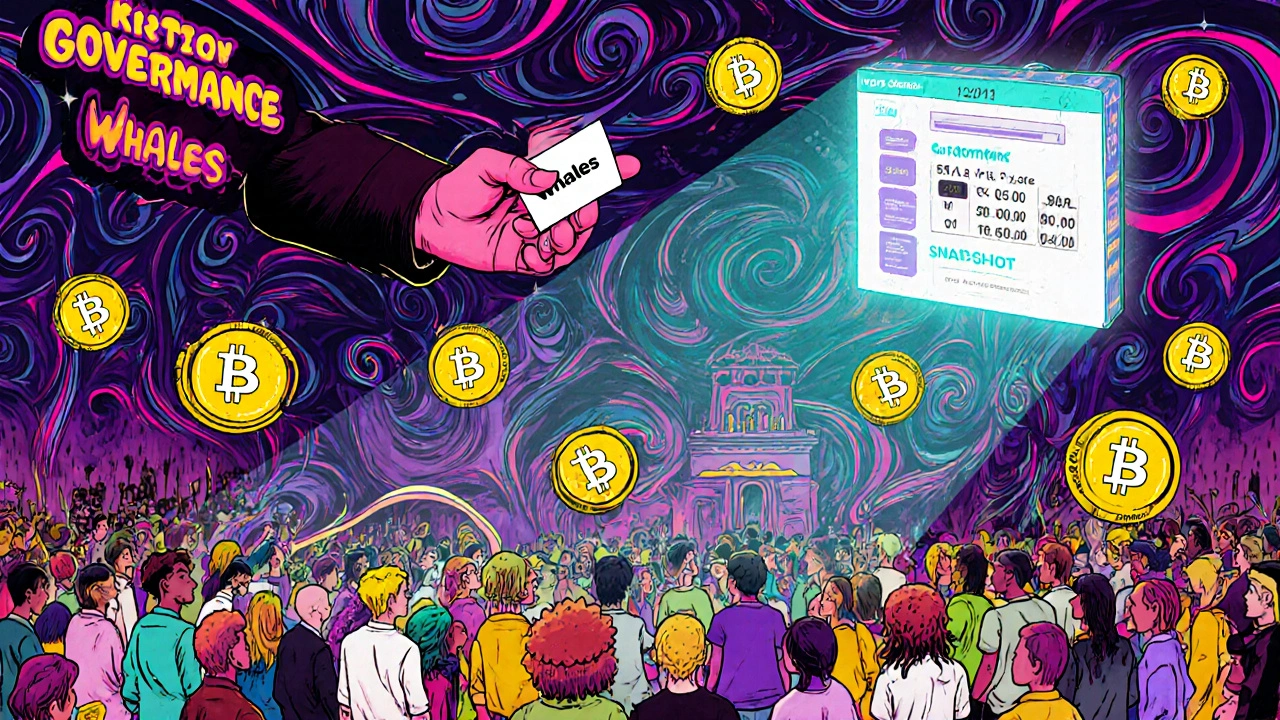
When you hold a governance token, a digital asset that lets holders vote on changes to a decentralized finance protocol. Also known as voting tokens, it gives you a say in how platforms like Uniswap or Aave evolve—without a CEO or board deciding for you. But here’s the catch: most people who own these tokens never vote. In fact, less than 5% of UNI or MKR holders typically cast a ballot, while a handful of wallets control over 60% of the voting power. That’s not democracy—it’s concentrated influence dressed up as decentralization.
This is where DeFi voting, the system that lets token holders propose and approve protocol upgrades, fee changes, or new features meets real-world behavior. You don’t need to be a coder to vote, but you do need to understand what’s on the table. Is the protocol changing its liquidity mining rewards? Is it adding a new collateral asset? These decisions directly affect your earnings and the value of your holdings. And if you’re not paying attention, someone else is making those choices for you—often with their own profit in mind.
Crypto governance, the broader framework that defines how blockchain communities make decisions is still figuring itself out. Early models gave too much power to whales. Newer ones are testing quadratic voting, delegation systems, and even token-locking incentives to encourage broader participation. In 2025, we’ll see more protocols tie voting rights to long-term holding or active participation—not just wallet balance. That’s a big shift, and it’s already starting in smaller chains.
Behind every governance token is a DeFi protocol, a self-running financial service built on blockchain, like lending, trading, or insurance, without traditional middlemen. These aren’t apps you download—they’re code running on Ethereum or other networks, updated only when the community agrees. That means your investment isn’t just in the token price. It’s in the health of the system behind it. If the governance fails, the protocol can stagnate, get hacked, or lose trust—and your money with it.
So what does this mean for you? You don’t have to become a blockchain lawyer. But you do need to know when a vote is happening, what’s at stake, and whether the changes help or hurt your position. The posts below break down exactly how MKR, UNI, and AAVE work—not just as tokens, but as tools of power. You’ll see who really controls the votes, why most people stay silent, and how new systems are trying to fix it. No fluff. No jargon. Just what you need to know to make your voice matter—or at least, not get left behind.