
Retirement Withdrawal Risk Calculator
See how market timing impacts your retirement portfolio. Enter your current portfolio value and initial withdrawal amount, then adjust market returns to see how early downturns affect your retirement longevity.
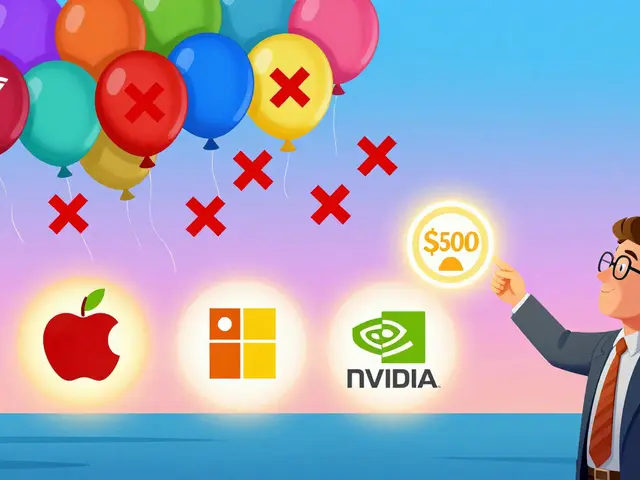
Imagine this: you’ve worked your whole life, saved diligently, and finally retired. Your portfolio is worth $1 million. You plan to withdraw $40,000 a year-4%-to live on. Everything seems fine. But then, right after you retire, the market drops 20%. You still take your $40,000. The next year, it drops another 15%. Suddenly, your portfolio isn’t $1 million anymore. It’s $700,000. And you’re still withdrawing the same amount. What happens next? Even if the market recovers over the next decade, your portfolio may never bounce back. That’s not bad luck. That’s sequence of returns risk.
What Is Sequence of Returns Risk?
Sequence of returns risk (SORR) is the danger that the order of your investment returns-especially in the first few years of retirement-can destroy your portfolio’s ability to last. It’s not about how much you earn over time. It’s about when you earn it. Think of it like this: if you lose money early, and you’re pulling cash out to pay bills, you’re locking in those losses. You’re not just watching paper losses-you’re turning them into real ones. A 20% market drop in year one, followed by a $40,000 withdrawal, doesn’t just reduce your portfolio to $800,000. It drops it to $760,000. Then, if the market rebounds 20% the next year, you’re not back to $1 million. You’re at $912,000. You need a 56% gain just to get back to where you started. This isn’t theoretical. Research from MIT Sloan and Northwestern Mutual shows that the first five years of retirement account for up to 85% of your total sequence risk exposure. A retiree who hits bad markets early can run out of money 10-15 years sooner than someone with the same average returns but better timing.Why the 4% Rule Isn’t Enough Anymore
The 4% rule-born from William Bengen’s 1994 study-said you could safely withdraw 4% of your portfolio each year, adjusted for inflation, and never run out of money over 30 years. That was based on historical data from 1926 to 1976. But those were different times. Interest rates were higher. Inflation was more predictable. Markets didn’t swing as wildly. Today, the 4% rule is risky. In 2022, inflation hit 9%, interest rates spiked, and markets dropped. Retirees who stuck to 4% withdrawals saw their portfolios shrink faster than ever. The Trinity Study’s 2023 update now suggests a 3.3% withdrawal rate for portfolios with heavy bond exposure. Why? Because bonds aren’t the safe harbor they used to be. When rates rise, bond prices fall. And if you’re selling bonds to fund withdrawals during a downturn, you’re selling low. Worse, the 4% rule assumes fixed withdrawals. It doesn’t adapt. It ignores the fact that your portfolio’s value changes. That’s like driving a car with your foot glued to the gas pedal-even when you’re going downhill.How Sequence Risk Destroys Portfolios
Let’s look at two retirees, both with $1 million, both withdrawing $50,000 a year. Both end up with the same 6% average return over 20 years. But their outcomes are worlds apart. Retiree A gets bad returns in years 1-3: -10%, -15%, -5%. By year 4, their portfolio is down to $740,000. Even though returns improve after that, they never recover. They run out of money by year 17. Retiree B gets great returns in years 1-3: +18%, +12%, +9%. Their portfolio grows to $1.4 million by year 4. Even if returns turn negative later, they have a cushion. They make it to year 30-and still have money left. The difference? Timing. The same average return. Two completely different outcomes. That’s sequence risk in action.What Actually Works: Dynamic Withdrawal Strategies
The fix isn’t more bonds. It’s not holding cash buckets. It’s not waiting for the market to bounce back. It’s flexibility. Dynamic withdrawal strategies adjust how much you take out based on your portfolio’s current value. If your portfolio drops 20%, you reduce your withdrawal by 15-20%. If it rebounds, you increase it. Schwab’s research found that retirees who cut withdrawals by 20% after a 15%+ market drop boosted their portfolio survival rate from 78% to 92% over 30 years. That’s a massive difference. Ben Felix from PWL Capital calls this “spending based on your portfolio’s health.” He found that retirees who adjusted their spending didn’t just survive longer-they ended up spending more overall than those stuck on fixed rules. Why? Because they didn’t burn through their portfolio too early. They preserved capital for recovery. Here’s a simple rule: if your portfolio drops more than 15% in a year, reduce your withdrawal by 10-15%. If it grows more than 10%, increase your withdrawal by 5%. Revisit this every year.
Beyond Withdrawals: Income Buffers
You don’t have to rely on your portfolio alone. Having other income sources reduces the pressure on your investments. Social Security is the most powerful tool most retirees have. Delaying it from 62 to 70 increases your monthly benefit by 76%. That’s free, inflation-adjusted income. Use it to cover essentials-housing, food, utilities-so you don’t have to sell assets during downturns. Annuities are another option. A single premium immediate annuity (SPIA) can give you guaranteed monthly income for life. You don’t need to annuitize everything. Just enough to cover your basic needs. That’s called a “floor and upside” strategy: use guaranteed income for essentials, keep the rest invested for growth. Part-time work, rental income, or even selling unused assets can also act as buffers. IG Wealth Management found that retirees with even $10,000-$15,000 in non-portfolio income were 40% less likely to deplete their savings.What Doesn’t Work (And Why)
Many advisors still push the “bucket strategy”-keeping 1-3 years of expenses in cash or short-term bonds. It sounds safe. But here’s the problem: cash earns almost nothing. Bonds are volatile now. And if you’re not rebalancing, you’re missing out on recovery. Vanguard’s 2022 study showed retirees who used buckets but didn’t refill them after markets rebounded ran out of money 15% faster than those who kept their allocations balanced. Why? Because they stopped investing in growth assets when they should have doubled down. Similarly, shifting to 60-70% bonds before retirement might feel safer. But bonds won’t save you in a prolonged downturn. They won’t grow enough to outpace inflation. And when you need to sell them during a bear market, you’re still selling low. The real answer isn’t less risk. It’s smarter risk.When to Start Planning
You can’t fix sequence risk after you retire. You have to plan for it before. Start 3-5 years before retirement. Reduce your equity exposure gradually-not to 30%, but to 50-60%. Keep enough growth to outlast inflation. Build your income buffers. Know your Social Security options. Decide how much you’re willing to cut back if markets crash. American Century Investments recommends reducing stock exposure from 70% in your 50s to 40-50% at retirement. That’s enough to keep growth alive, but not so much that a 20% drop wipes you out. And don’t forget: you’ll need to spend 10-15 hours a year reviewing your plan. The most critical decisions happen in the first five years. Don’t set it and forget it.
The Bigger Picture: Why This Matters Now
Sequence of returns risk isn’t going away. Inflation is more volatile. Interest rates are unpredictable. People are living longer. The average retirement lasts 20-25 years now-not 15. The industry is responding. In 2023, 87% of financial advisors incorporated sequence risk into their plans-up from 52% in 2018. Annuities with guaranteed lifetime withdrawal benefits hit $147 billion in assets. The Department of Labor now requires retirement plans to include sequence risk in income projections. And it’s working. Research shows that retirees using dynamic strategies increased their portfolio longevity from 28.7 years to 32.4 years on average. That’s an extra 3-4 years of financial security. This isn’t about being perfect. It’s about being prepared. You don’t need to predict the market. You just need a plan that adapts when it turns against you.What to Do Right Now
If you’re within 5 years of retirement:- Calculate your essential expenses. How much do you need to live on?
- Map out your guaranteed income: Social Security, pensions, annuities.
- Subtract that from your expenses. The gap is what your portfolio must cover.
- Set a withdrawal cap-say, 3.5%-and build in a rule: if your portfolio drops 15%, reduce withdrawals by 10-15%.
- Keep at least 40% of your portfolio in stocks. You need growth to outlive inflation.
- Review your plan every year. Don’t wait for a crisis.
- Look at your portfolio’s value compared to when you started.
- If it’s down more than 15%, consider cutting your withdrawal.
- Use Social Security to cover essentials so you don’t have to sell investments.
- Don’t panic. Don’t sell everything. Adjust. Then wait.



Comments
This post nailed it. I watched my aunt deplete her portfolio after retiring in 2020 because she stuck to the 4% rule. She didn’t adjust when the market crashed, and by year five, she was selling bonds at a loss just to cover groceries. Dynamic withdrawals aren’t just smart-they’re survival tools. I started using a 10% cut rule after a 15% drop, and it’s made all the difference. No panic. No regret. Just discipline.
Also, Social Security at 70 was the best financial decision she ever made-too bad she didn’t wait. Don’t rush it.
It is truly fascinating how the sequence of returns, which is essentially a manifestation of temporal asymmetry in financial outcomes, reveals the profound inadequacy of static models in human life planning. The 4% rule, born in an era of higher yields and lower volatility, now resembles a mechanical clock in the age of quantum computing-technically functional, yet fundamentally obsolete.
What we are witnessing is not merely a failure of investment strategy but a deeper epistemological flaw: the human tendency to treat uncertain, non-stationary systems as if they were governed by fixed laws. The market does not owe us a smooth trajectory, nor does it care for our retirement timelines. The real wisdom lies not in predicting returns, but in cultivating adaptive resilience-a philosophical stance as much as a financial one.
And yet, how many retirees are equipped with the psychological tools to reduce spending when their portfolio shrinks? The mind rebels against contraction, even when logic screams for it. This is why behavioral finance must be woven into every retirement plan-not as an afterthought, but as its very foundation.
Perhaps the true measure of retirement security is not the size of the portfolio, but the flexibility of the spirit.
Ugh. Another ‘4% is dead’ LinkedIn post masquerading as financial wisdom. Look, I get it-you’re scared. But let’s be real: most people who panic about sequence risk are the same ones who bought crypto in 2021 and now think bonds are ‘volatile.’
Here’s the truth: if your portfolio can’t survive a 20% drop in year one, you were overleveraged to begin with. You didn’t need a ‘dynamic withdrawal strategy’-you needed to retire with less money. Or work longer. Or stop pretending your $1M portfolio is enough to fund a $40K lifestyle in 2025.
And don’t even get me started on annuities. Those are financial snake oil sold by guys in suits who charge 3% fees to give you 4% yield. The real ‘floor and upside’? Don’t spend more than you have. Radical, I know.
Also, ‘keep 40% in stocks’? That’s not a strategy. That’s a prayer.
Thank you for this. 😊
I retired last year. Portfolio down 18%. Cut withdrawals by 12%. Used my part-time tutoring income to cover groceries. Still sleeping well. No panic. Just patience.
And yes-Social Security at 70. Best. Decision. Ever.