Qualified Charitable Distribution Rules: How to Give Tax-Free from Your IRA
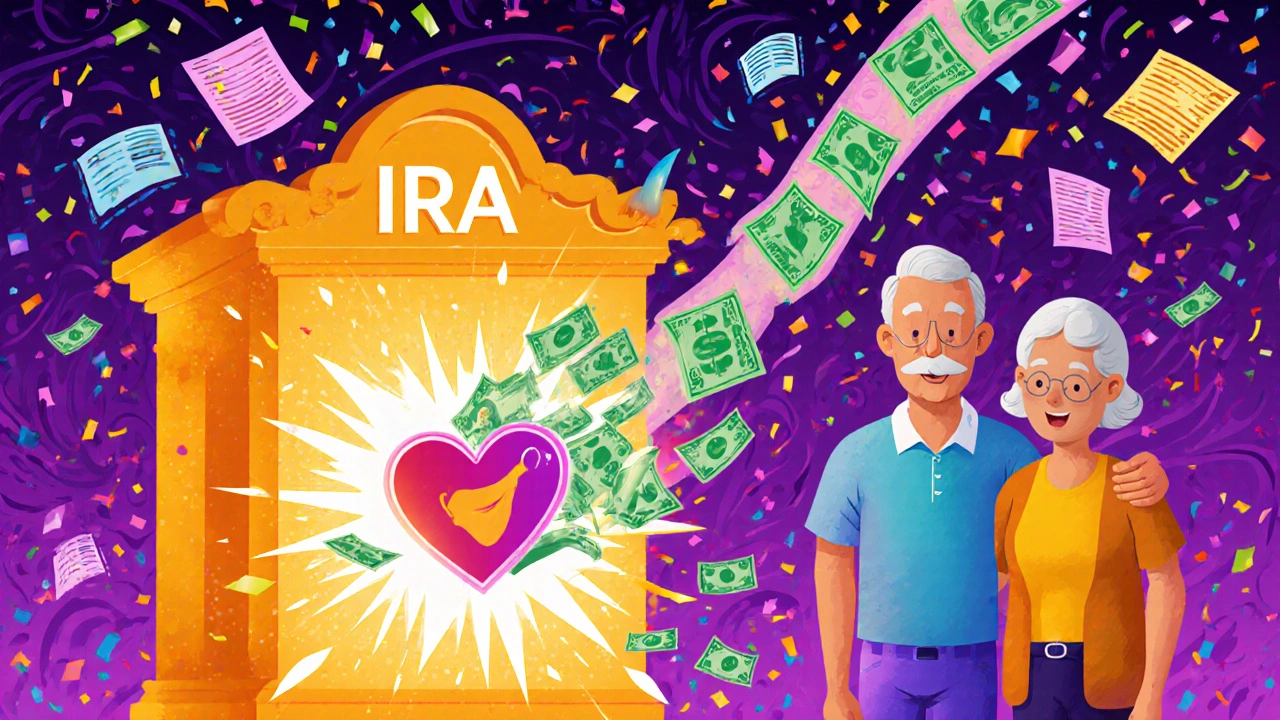
When you’re 70½ or older, the Qualified Charitable Distribution, a tax-free transfer from your IRA directly to a qualified charity. Also known as a QCD, it lets you give money to causes you care about while reducing your taxable income. This isn’t a donation you write a check for—it’s a direct move from your retirement account to the nonprofit, and the IRS treats it like it never entered your pocket. That means no income tax, no itemizing, and it counts toward your Required Minimum Distribution (RMD). If you’re taking RMDs and already give to charity, you’re leaving money on the table if you haven’t used this rule.
QCDs aren’t just for big givers. You can send up to $100,000 per year from your IRA to one or more eligible charities. The money must go straight from the custodian to the nonprofit—no cashing out first. You can’t use a QCD to fund a donor-advised fund or private foundation; it has to go to a public charity. And while you can’t claim a tax deduction for the gift (since it’s already tax-free), you still get the real benefit: lower adjusted gross income. That’s huge. Lower AGI means you might pay less in Medicare premiums, avoid triggering taxes on your Social Security, and stay under income thresholds for other deductions. It’s one of the few moves in retirement planning that cuts taxes without changing your lifestyle.
People often mix up QCDs with Roth conversions or backdoor IRAs, but they’re different tools. A QCD is about giving, not saving. It’s not for boosting future tax-free growth—it’s for reducing today’s tax bill. And it works best when you’re already required to take money out of your IRA. If you’re 73 and need to pull $25,000 for your RMD, why not send $25,000 straight to your church, animal shelter, or university? You meet your legal requirement, help your favorite cause, and your tax return looks cleaner. You don’t need a financial advisor to do this—just a call to your IRA provider and the charity’s donation address. Many firms have forms for QCDs built right into their online portals. The hardest part? Deciding who to give to.
There’s no penalty for using a QCD in a year you don’t need the RMD. If your account balance dropped and your RMD is $8,000 but you want to give $20,000, you can. The IRS doesn’t care if you give more than you’re required to take. And if you’re married, each spouse can give up to $100,000 from their own IRA. That’s $200,000 in tax-free giving per household, every year. It’s one of the most underused, high-impact moves in retirement planning. The posts below show you exactly how to set it up, what charities qualify, how to document it, and what happens if you make a mistake. You’ll find real examples from people who’ve used QCDs to cut their tax bill by thousands—and sleep better knowing their money went where it mattered most.